
Best Schematic Drawing Tools for DIY Electronics Enthusiasts
XTEN-AV X-DRAW, a cutting-edge solution that leverages AI to revolutionize the way you design and plan your electronics projects. So let's get started on finding the perfect schematic design program

Are you a DIY electronics enthusiast looking for the best schematic design program to bring your ideas to life? Whether you're a beginner just starting out or a seasoned pro working on complex projects, having the right tools is essential. In this comprehensive guide, we'll explore the world of schematic drawing software, highlighting the key features to look for and the top options on the market. We'll also dive deep into XTEN-AV X-DRAW, a cutting-edge solution that leverages AI to revolutionize the way you design and plan your electronics projects. So let's get started on finding the perfect schematic design program for your needs!
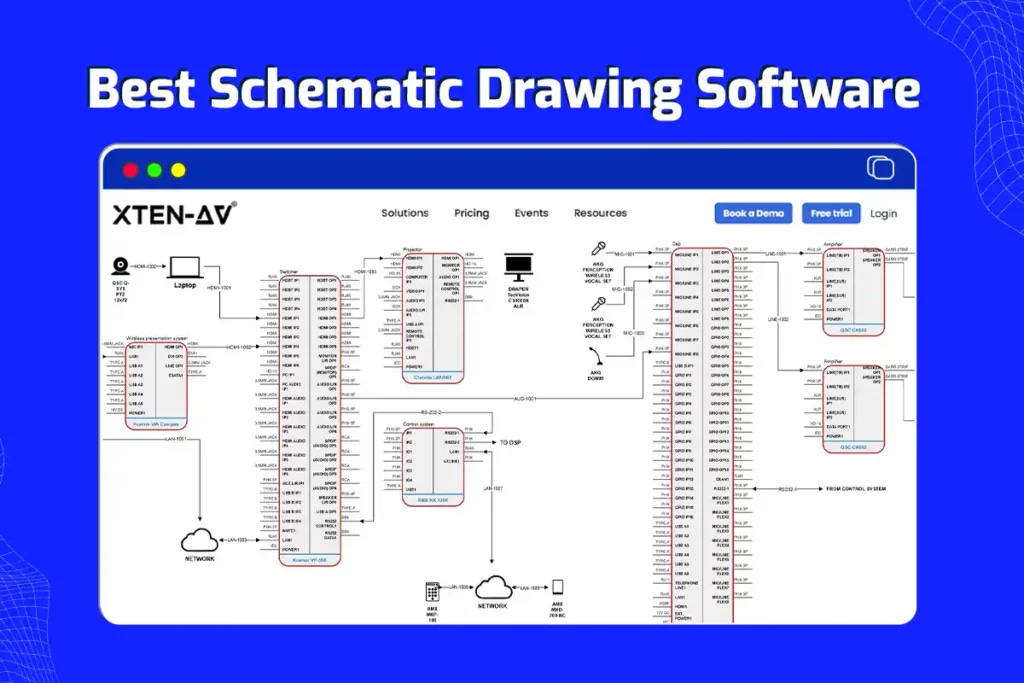
Why Use Schematic Drawing Software?
Before we look at specific tools, let's discuss why using dedicated schematic drawing software is so important for electronics design:
Clarity and Standardization
Schematic diagrams provide a clear, standardized way to represent electronic circuits. They use recognized symbols and conventions to show how components are connected, making it easy for anyone familiar with the standards to understand the design.
Error Reduction
Drawing schematics by hand is prone to errors, especially as designs get more complex. Schematic software provides validation and catches many common errors, such as unconnected pins or invalid connections between components.
Collaboration and Sharing
Most schematic tools allow you to easily share your designs with others, either by exporting to standard file formats or through cloud collaboration features. This is essential for getting feedback or working with a team.
PCB Design Integration
For many projects, the schematic is just the first step. Most schematic tools integrate with PCB design software, allowing you to easily transition your schematic into a physical board layout.
Simulation and Analysis
Some advanced schematic tools include simulation features, allowing you to test and analyze your circuit's behavior before you build it. This can save significant time and cost in the long run.
Key Features to Look for in Schematic Drawing Tools
Now that we understand the importance of schematic software, what features should you prioritize in your tool selection? Here are some key capabilities to look for:
Extensive Component Libraries
A good schematic tool will come with a large library of pre-made symbols for common components. This saves you from having to draw each resistor, capacitor, or IC from scratch.
Custom Symbol Creation
While pre-made libraries are helpful, you'll inevitably need to create custom symbols for unique components. Look for tools that make symbol creation easy, with features like pin assignment and parametric drawing.
Multi-Sheet Support
Complex designs often span multiple pages. Your schematic software should make it easy to create multi-sheet designs, with clear inter-sheet references and navigation.
Electrical Rule Checking (ERC)
ERC is a feature that automatically checks your schematic for common errors, such as shorted pins, unconnected inputs, or mismatched net names. This is a must-have for catching mistakes early.
Netlist Export
To transition your schematic to a PCB layout, you'll need to generate a netlist - a file that describes all the connections in your circuit. Make sure your schematic tool can export industry-standard netlist formats.
Cross-Probing with PCB Layout
For even tighter integration between schematic and layout, look for tools that support cross-probing. This allows you to click on a component or net in the schematic and immediately see where it is in the layout, and vice versa.
Cloud Collaboration
If you work with a team, cloud features are increasingly important. Some modern tools allow multiple people to view and edit the same schematic in real-time, with version control to track changes.
How to Choose the Right Schematic Drawing Software
With so many options, how do you pick the rightschematic design programfor your needs? Here are some factors to consider:
Ease of Use
If you're a beginner, ease of use should be a top priority. Look for tools with intuitive interfaces, helpful tutorials, and active user communities where you can get support.
Libraries and Integrations
Consider what types of components and systems you'll be designing. Make sure the tool you choose has relevant libraries and integrates with the other software and workflows you use.
Collaboration and Sharing
If you work with a team, look for tools with strong collaboration features like real-time co-editing, version control, and easy sharing of designs.
Automation and AI
For complex systems, tools that automate repetitive tasks and provide intelligent design assistance (like XTEN-AV X-DRAW's AI features) can dramatically speed up your workflow.
Budget
Finally, consider your budget. While powerful commercial tools offer many benefits, there are also capable free and low-cost options if you're just starting out or working on a shoestring.
Top Schematic Drawing Tools
With those key features in mind, let's look at some of the top schematic drawing software options on the market:
1. XTEN-AV X-DRAW
XTEN-AV X-DRAW is a ground breaking schematic design program that leverages artificial intelligence to streamline and automate the electronics design process. It's particularly well-suited for AV system integration, with features tailored for designing professional audio-visual systems.
AI-Powered Design Automation (via XAVIA)
What really sets X-DRAW apart is its AI engine, XAVIA. XAVIA supercharges the design process by automating many repetitive and time-consuming tasks:
Suggests components based on your system requirements
Creates signal flows and wiring paths automatically
Optimizes system layouts for efficiency and compliance
Ensures compatibility between devices in real-time
This AI assistance eliminates many human errors and significantly reduces the time needed to draft AV schematics. It brings a new level of intelligence and speed to the design process.
Drag-and-Drop Interface with Real-Time Intelligence
X-DRAW features an intuitive drag-and-drop interface that makes it easy to visually construct your schematics. As you work, the underlying AI provides real-time intelligence:
Auto-linking devices based on signal type
Identifying incorrect connections (e.g. connecting HDMI to analog)
Updating all relevant components when one is changed
This means even users without deep engineering knowledge can produce accurate, functional AV schematics. It democratizes the design process while maintaining high technical standards.
Automatic Bill of Materials (BOM) Generation
Another major time-saver in X-DRAW is automatic BOM generation. As you build your schematic, the software creates a dynamic bill of materials in the background, including:
Accurate part numbers and descriptions
Pricing (when integrated with vendor databases)
Real-time updates as the schematic is modified
You no longer need to manually maintain hardware lists - your BOM is always up-to-date. This greatly streamlines the proposal, purchasing, and project planning processes.
Real-World Product Database Integration
X-DRAW integrates with extensive databases of real-world AV products from leading manufacturers. When you add a component to your schematic:
You're specifying an actual product, not a generic placeholder
Compatibility is verified in real-time against other components
Detailed product specs are embedded in the design
This grounding in real products reduces discrepancies between the schematic and the final installation.
Cloud-Based Collaboration
Being cloud-native, X-DRAW enables seamless online collaboration. Multiple users can work on the same schematic simultaneously, with features like:
Real-time syncing of changes
Version control and change tracking
Role-based access control for different stakeholders
For AV integrators, where coordination between sales, engineering, and installation teams is critical, this ensures everyone is always on the same page.
Automated Proposals and Documentation
X-DRAW automates much of the documentation process for AV projects:
Generate client-facing proposals with visuals, specs, and pricing
Export detailed installation drawings, wiring diagrams, and scopes of work
Instantly create project documentation directly from the schematic
These features save hours of manual work per project and ensure your deliverables are always professional and consistent.
Mobile and Tablet Friendly
Being cloud-based, X-DRAW is accessible from any device with a web browser. This is especially valuable for:
On-site work using tablets or iPads
Quick reference and markup using smartphones
Cross-platform access (Windows, Mac, Linux) for a distributed workforce
Field technicians and sales reps can view and annotate schematics wherever they are, keeping the whole team aligned.
2. AutoCAD Electrical
AutoCAD Electrical, part of the AutoDesk family, is a powerful schematic design tool tailored for controls designers. Its key features include:
Comprehensive symbol libraries for PLC I/O, terminals, relays, etc.
Automatic wire numbering and component tagging
Real-time error checking for common issues
Integration with the broader AutoCAD suite for 2D/3D design
Automatic report generation for BOMs, from/to lists, etc.
3. EPLAN Electric P8
EPLAN Electric P8 is a professional schematic tool for electrical, automation, and mechatronics design. It boasts:
Extensive part data libraries from leading manufacturers
Intelligent cross-referencing between schematics, layouts, and BOMs
Automated device and wire numbering
Realistic 2D panel layouts generated from schematics
Integration with 3D CAD for cabinet and machine designs
4. KiCad EDA
KiCad is a free, open-source schematic capture and PCB layout tool. While more basic than some commercial options, it's very capable for its price point:
Integrated schematic editor and PCB layout tool
Extensive component libraries with 3D models
Highly active user community for support and extensions
Scripting and automation features for power users
Exports to industry standard formats like Gerber and STEP
5. Eagle
Eagle, now part of Autodesk, is a popular schematic and PCB layout tool, especially for hobbyists and small businesses. It offers:
Large component libraries from major suppliers
Intuitive schematic and board editors
Real-time design rule checking for errors
Extensive tutorials and user community support
Affordable pricing for non-commercial use
User Questions about Schematic Drawing Tools
Here are some common questions from users about choosing and using schematic drawing software:
What's the best schematic tool for beginners?
For beginners, we recommend starting with a free or low-cost tool with an intuitive interface and good learning resources. KiCad and Eagle are popular options that offer extensive tutorials and user communities for support.
Can I use the same tool for schematic and PCB layout?
Many schematic tools, including all the ones we've discussed, integrate with or include PCB layout capabilities. Using an integrated suite allows for seamless synchronization of your schematic and board design.
How important is the size of the component library?
The size and relevance of the component library can significantly impact your design workflow. Look for tools with extensive libraries in your domain (e.g. audio-visual for AV integrators, power electronics for electrical engineers, etc.). Many tools also allow you to import libraries from component distributors or create your own.
What if I need to collaborate with team members?
For team collaboration, consider cloud-based tools that allow multiple users to view and edit designs simultaneously. XTEN-AV X-DRAW, for example, is fully cloud-based and offers real-time collaboration features tailored for AV integrator teams.
How can I check my schematic for errors?
Most modern schematic tools include some form of automated error checking or electrical rule checking (ERC). This analyzes your design for common issues like unconnected pins, shorted nets, or mismatched parameters. Some advanced tools like XTEN-AV X-DRAW use AI to provide even more comprehensive real-time error detection.
Can I generate a BOM from my schematic?
Yes, most schematic tools can generate a bill of materials (BOM) from your design. The BOM lists all the components used, along with key properties like part number, description, and quantity. Some tools can even pull in pricing info from supplier databases and update the BOM in real-time as you modify the schematic.
What formats should I use to share my schematics?
The best format for sharing schematics depends on your audience and purpose. For collaboration with other engineers, use the native file format of your schematic tool. For documentation and manufacturing, consider exporting to a standard format like PDF, SVG, or DXF. If posting online, PNG or JPEG images are best for general viewing.
Are there free alternatives to X‑DRAW?
While some tools are free (like diagrams.net), for pro AV workflows—with real product libraries and automation—X‑DRAW remains unmatched.
How do I avoid schematic drawing mistakes?
Use tools with error detection and real-world validation like X‑DRAW, which flags wiring mismatches and compatibility issues automatically.
Do schematic tools generate proposals?
Yes—X‑DRAW can auto-create proposals, wiring diagrams, rack layouts, and BOMs straight from your design.
Can schematic tools sync with CRM systems?
Modern ones like X‑DRAW integrate with CRMs (like Salesforce), PM tools, and sales pipelines for seamless project workflow.
How do integrators choose components in schematics?
With X‑DRAW + XAVIA, the software suggests compatible gear based on project specs and ensures everything aligns.
What is the benefit of a real product database?
It ensures your schematic maps to actual, orderable components. X‑DRAW uses this to produce accurate BOMs and documentation.
How do I generate installation documentation from schematics?
Tools like X‑DRAW let you export installation-ready drawing packages and proposal documents in one click.
Are there AV schematic tools supporting version control?
Yes—X‑DRAW offers change tracking, collaborative editing, and historical versioning natively in the cloud.
What’s the relevance of AVIXA standards in schematic software?
Tools like X‑DRAW adhere to AVIXA (and related) design standards, ensuring professionalism and install-readiness.
Can schematic tools detect wiring length or power issues?
Advanced tools like X‑DRAW include built-in checks for signal path conventions, power rail separation, and layout clarity.
User Case Studies
To see how schematic design programs are used in practice, let's look at a couple of real-world case studies:
Case Study 1: AV Integrator Streamlines Design with X-DRAW
Acme AV Solutions is a mid-sized AV integrator that designs and installs audio-visual systems for corporate and educational clients. They were looking to streamline their design process and improve collaboration between their sales, engineering, and installation teams. They adopted XTEN-AV X-DRAW as their primary schematic design program, taking advantage of its AI-powered automation and cloud collaboration features. With X-DRAW, their sales reps can now generate preliminary system designs directly from customer requirements. These designs are then refined by the engineering team, with X-DRAW's AI suggesting optimized component selections and catching any compatibility issues. The resulting schematics are automatically synced with Acme's CRM and project management tools, and used to generate customer proposals, BOMs, and installation docs. The installation team can access the latest schematics from their mobile devices on the job site. Since adopting X-DRAW, Acme has seen a 50% reduction in design time, 25% fewer on-site errors, and a 20% increase in project margins. They credit the tool's AI automation, real-time collaboration, and tight integration with their business processes.
Case Study 2: Electronics Startup Designs New Product with KiCad
Voltron Electronics is a hardware startup developing a new line of smart home sensors. As a small team with a tight budget, they needed an affordable yet capable schematic design program for their product development. They chose KiCad for its powerful capabilities and active open-source community. Using KiCad, they were able to quickly iterate on their sensor designs, leveraging the tool's extensive component libraries and real-time design rule checking. KiCad's tight integration between schematic and PCB layout allowed them to quickly turn their schematics into physical prototypes. They also took advantage of KiCad's scripting capabilities to automate repetitive tasks and generate custom manufacturing outputs. With KiCad, Voltron was able to go from concept to production-ready designs in under 6 months, all without breaking the bank on expensive software licenses. They continue to use KiCad for new product development and have contributed several enhancements back to the open-source community.
Conclusion
Choosing the right schematic design program is a critical decision for any electronics designer or AV integrator. The right tool can streamline your design process, catch costly errors, and facilitate seamless collaboration. For AV system integration, XTEN-AV X-DRAW stands out for its AI-powered automation, real-world product integration, and cloud collaboration features purpose-built for AV workflows. Its ability to automate key design tasks and generate customer-ready proposals sets a new standard in AV schematic design software. But regardless of your specific domain, the key is to find a tool that aligns with your design needs, budget, and workflow. By leveraging the power of modern schematic drawing software, you can bring your electronics ideas to life faster and more efficiently than ever before.